Street
Fighter
REVIEW:
The original Street
Fighter arcade game debuted all the way back in 1987. The player takes control of
a lone martial artist named Ryu who
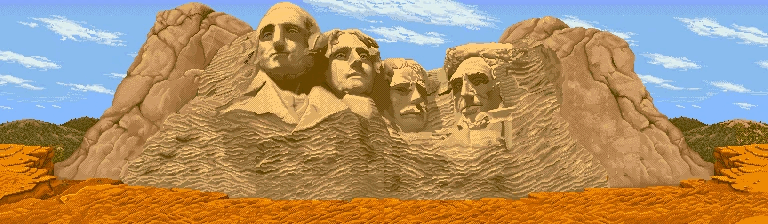
competes in a worldwide martial arts tournament spanning five different
countries (United States, Japan, China, England and Thailand). Ryu fights against
ten different opponents in a specific order (two per country). As Ryu, the
player does not fight all
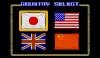
opponents in a fixed linear order right from the start. Instead, you choose your
starting path among four initial countries, fighting two fighters in each. Once
you clear all eight fighters across those four countries, you travel to Thailand
for the mandatory final two boss battles.
|
|
|
FUN
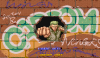
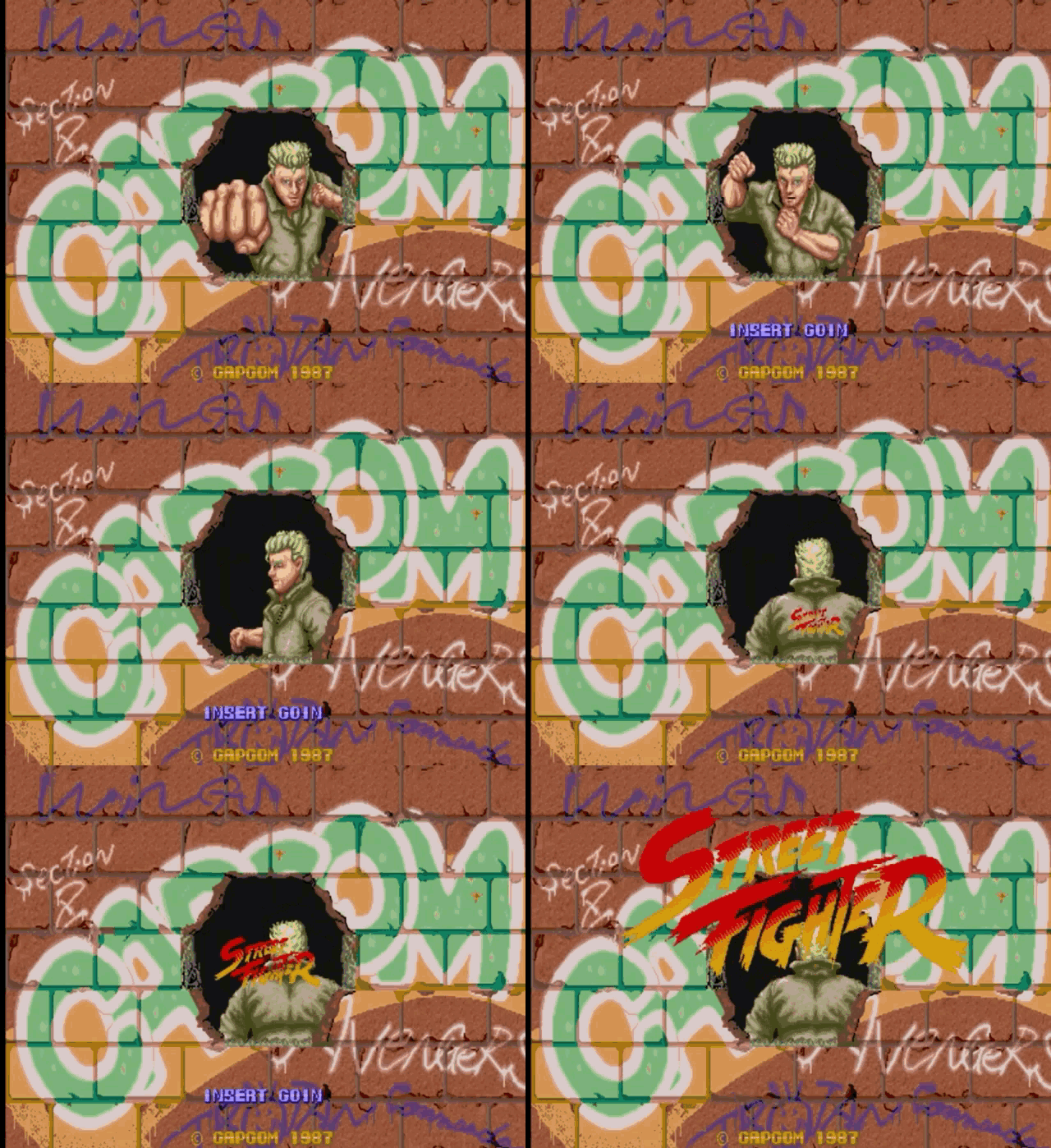
FACT: The blonde-haired fellow who punches through the wall in
SF1's
intro is said to have inspired Fatal
Fury's
Terry Bogard.
|
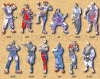
Depending on the arcade cabinet's
DIP switch settings, you pick between pairs of initial countries and defeat both
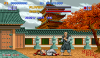
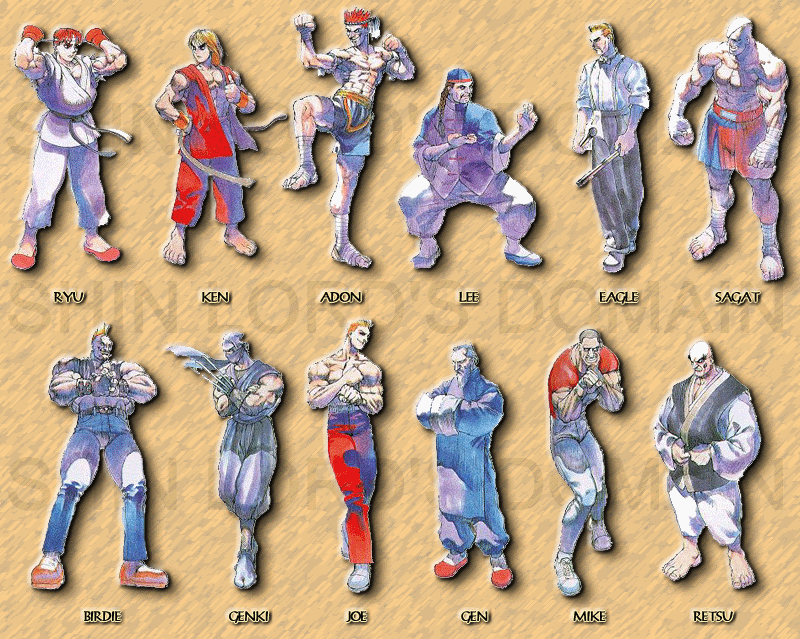
fighters in a region before moving to the next. In Japan, Retsu (an expelled
Shorinji Kempo instructor) and Geki (a claw-wielding ninja who uses shurikens
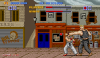
and teleportation) await the plater. In the U.S.A., the player encounters Joe,
an underground full-contact kickboxing / Karate champion, along with Mike, a
heavyweight boxer (and spiritual predecessor to Balrog). In China, Ryu
encounters Lee, an expert in Bajiquan / Chinese boxing, as well as Gen, an
elderly assassin who went on to become a staple in Street
Fighter Alpha. In England, the player fights Birdie, a towering punk
rock bouncer who uses wrestling and boxing moves, along with Eagle, a refined
bodyguard who fights with dual Kali / Escrima sticks. The Final Stage is
Thailand, where the player first encounters Adon, Sagat's
arrogant top Muay Thai pupil, and finally, Sagat (the Final Boss) and
"Emperor of Muay Thai".
|
|
|
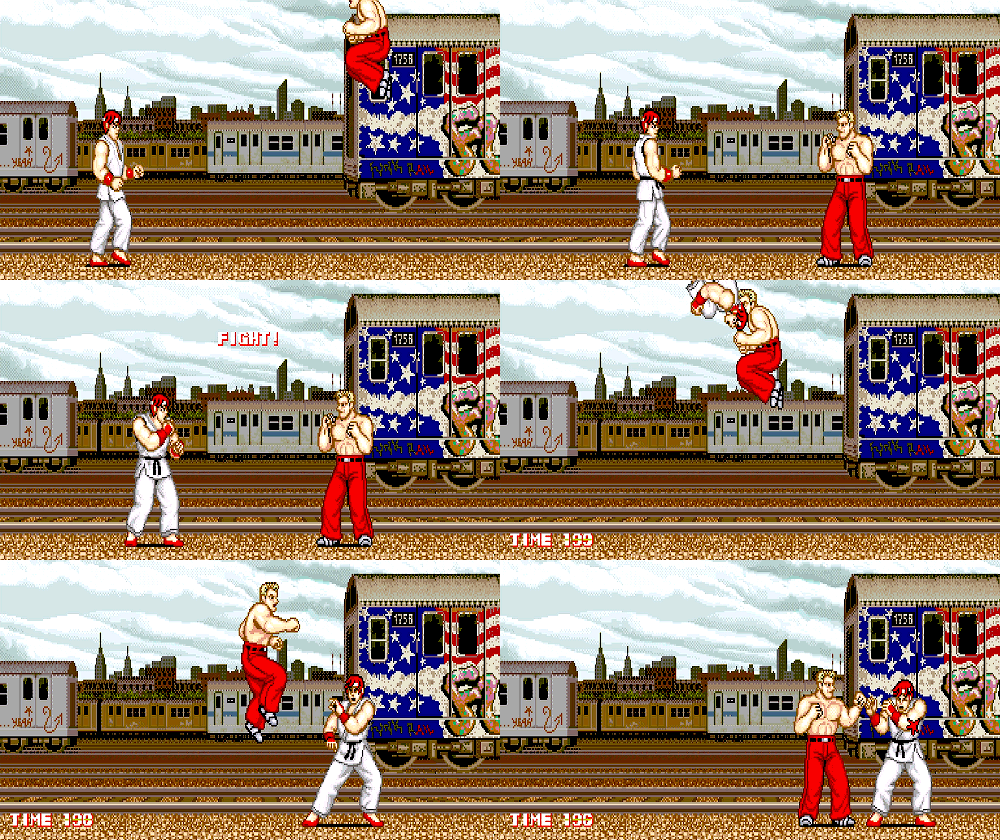
In
1987,
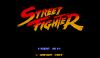
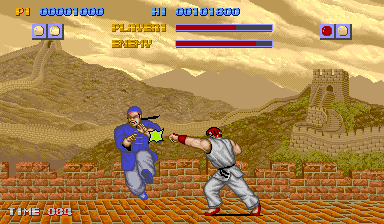
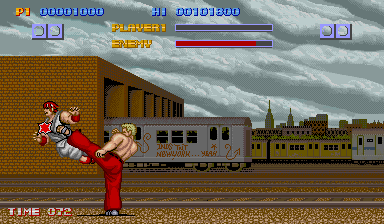
SF1 presented some of the BEST martial arts animation & visuals
in a video game to date! In terms of gameplay, the game didn't reach maturity until
the sequel, Street Fighter 2.
|
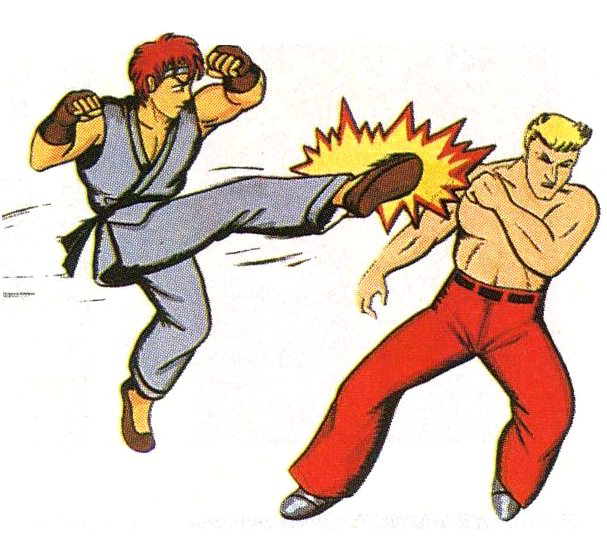
Players can perform three basic types of punches and kicks
which vary between
speed and strength. There are a total 6 attack buttons and 3 special attacks
(the Fireball, Rising Dragon Punch and Hurricane Kick) that could be performed
only by executing specific motions. A second player can join in any time
and take control of Ryu's rival, Ken Masters, during competitive matches and play
the rest of the game as Ken if they won.
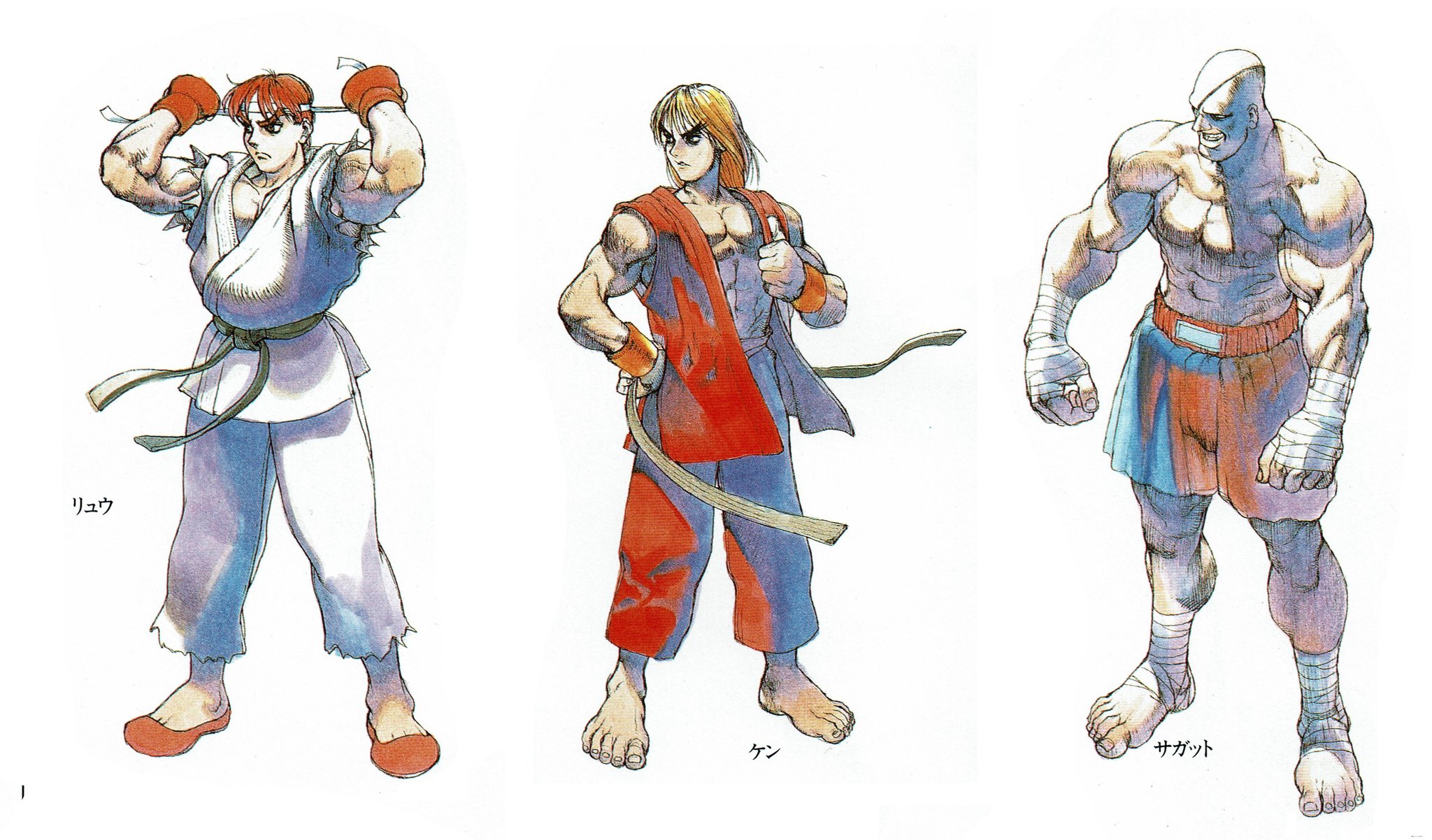
The original Street Fighter has been noted by fans of the series for its
considerable difficulty in executing special moves in comparison to its more
well known sequels. Even when using the traditional arcade buttons, the act of
simply performing a special move was a huge achievement for any player at the
time! 
|
|
|
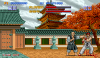
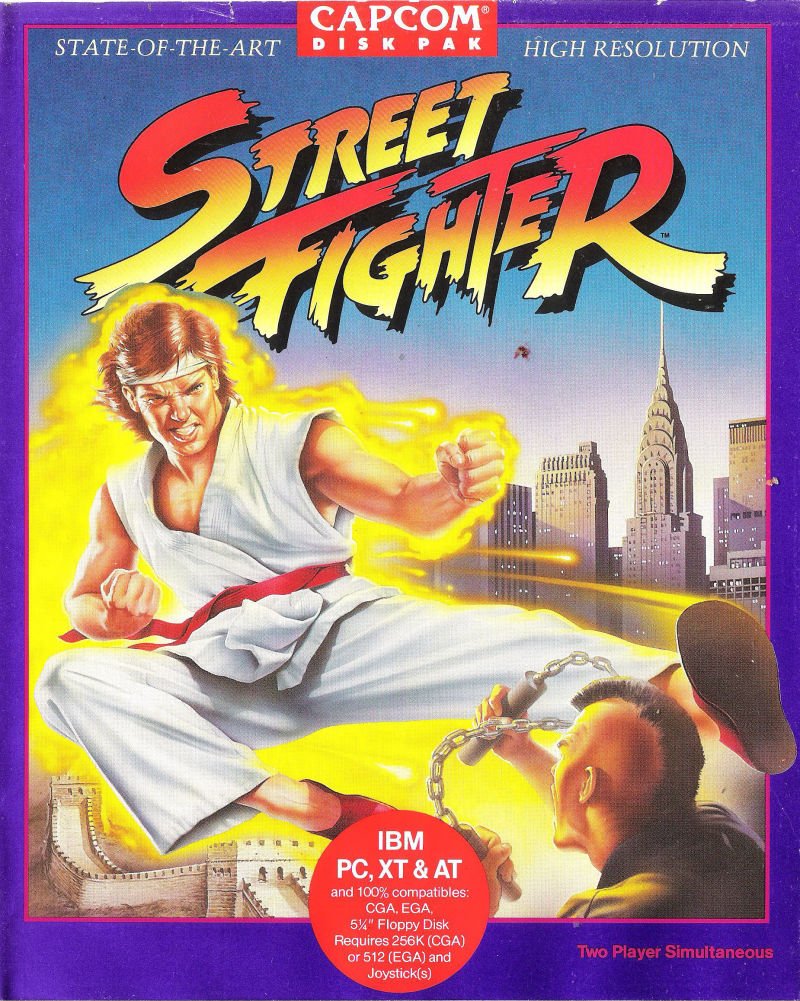
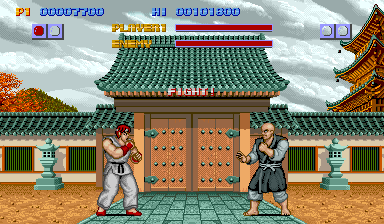
These
graphics were revolutionary in 1987!
|
While it is universally
respected as a foundational historic milestone that birthed the modern fighting
genre, SF1's actual gameplay is widely considered clunky, stiff, and
incredibly frustrating. The primary reasons the community views the game so
critically include: Nightmarish Special Move Inputs, The "Cheat Code"
Window: Executing a Hadouken, Shoryuken, or Tatsumaki Senpukyaku requires
pixel-perfect, frame-strict motion inputs. The game checks inputs upon the
release of a button (an early, unforgiving version of "negative
edge"), making special moves feel like a complete crapshoot to trigger. The
game also suffers from extreme damage imbalance, as special moves are so
difficult to pull off, Capcom made them absurdly overpowered to compensate.
Landing just one or two Shoryukens can entirely drain an opponent's life bar and
end the round.
Furthermore, the rigid and choppy movement, with characters walking and jumping
around feels incredibly jerky and definitely not "smooth" to play like
SF2. The game suffers from broken
hitboxes, inconsistent hitstun, and collision issues. Attacks occasionally phase
straight through opponents, and hitboxes rarely align perfectly with the
character sprites. The Brutal Cabinet Hardware was another reason for the
confusion and frustration behind actually playing this game.
Needless to say, it's amazing how rocky SF1's launch was in terms of gameplay
and how much the game improved and evolved over time.
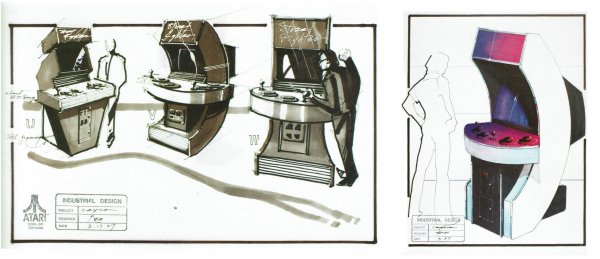
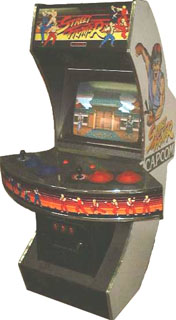
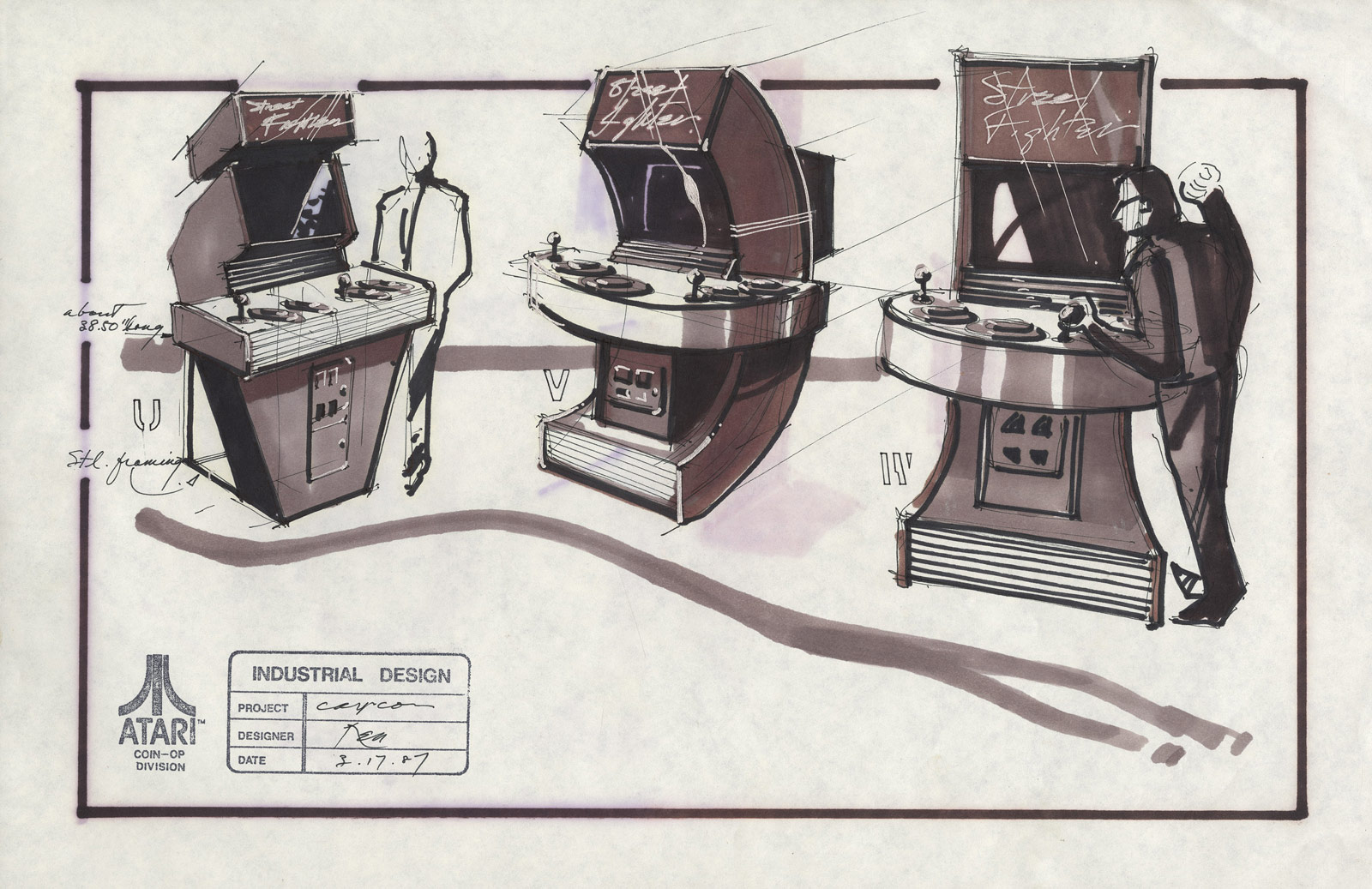
The original "deluxe" arcade cabinet didn't use six buttons, instead
featuring "pressure-sensitive" pads to measure the three strengths of
attack used in the game.
The large, rubber mecha-hydraulic pads determined attack strength based on how
hard physically slammed them. This quickly caused player fatigue and
constant mechanical breakdowns, forcing Capcom to pivot to the standard 6-button
layout we know today.
|
|
|
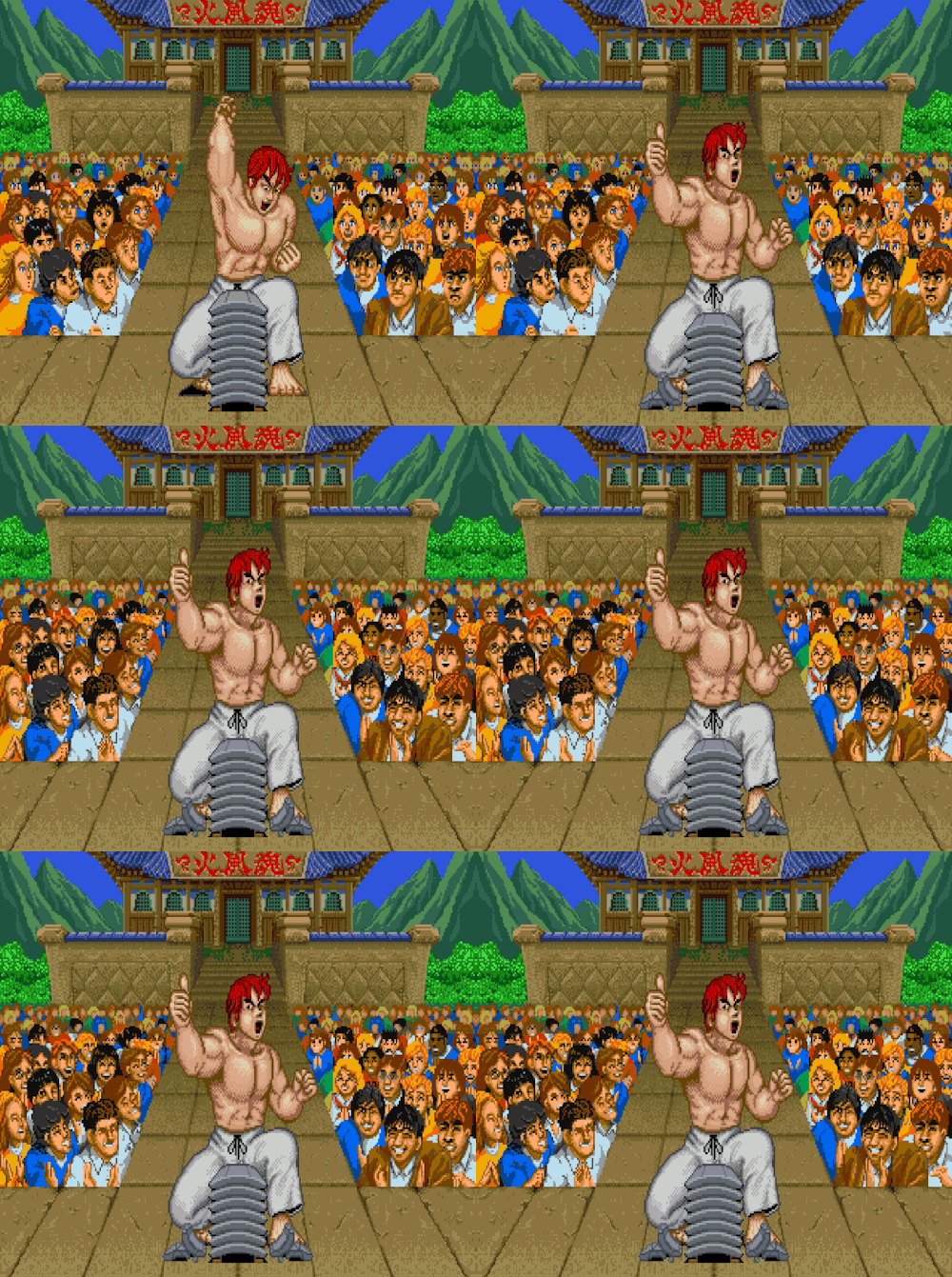
Ryu
breaking concrete in Street Fighter 1's Bonus Stage!
|
 FUN FACT:
The director and producer of the original Street
Fighter, Takashi Nishiyama, along with planner, Hiroshi Matsumoto, left
Capcom after they created SF1 and later joined SNK where they would go on
to design
Fatal
Fury and
Art of Fighting. FUN FACT:
The director and producer of the original Street
Fighter, Takashi Nishiyama, along with planner, Hiroshi Matsumoto, left
Capcom after they created SF1 and later joined SNK where they would go on
to design
Fatal
Fury and
Art of Fighting.
There's no denying Street
Fighter's impact on the arcade scene. There was simply nothing else like it at the
time, and it was definitely one of the best looking and most eye-catching video games in 1987.
As someone who personally played on a mint Street Fighter cabinet in the
late 80s quite frequently, I can vouch. This little game paved the way for one of the most recognizable video game franchises
of all time... and inspired many other companies to venture into the realm of
fighting.
|
|

| Page Updated: |
August
23rd, 2026
|
| Developer(s): |
Capcom
|
| Publisher(s): |
Capcom
|
| Designer(s): |
Takashi
Nishiyama
Director / Producer
Hiroshi Matsumoto
Planner |
| Artwork
by: |
Bengus
(CRMK)
Promotional Character Art
|
| Platform(s): |
Arcade, PC,
Commodore 64, Amiga, Atari ST, ZX Spectrum, TurboGrafx CD, PSP, Wii Virtual
Console
|
| Release Date(s): |
August 30th, 1987
Arcade |
| Characters: |
Ryu,
Ken,
Joe,
Eagle, Lee,
Birdie,
Geki,
Gen,
Mike,
Retsu, Adon,
Sagat
|
|
|
|
Featured Video:
|
|
|
| Related Games: |
Street
Fighter 2, Fatal
Fury,
International Karate,
Yie Ar Kung Fu, SF2: Champion Edition,
SF2: Turbo, Super SF2, Super
SF2 Turbo, SSF2 Turbo Revival, SSF2T HD Remix, Ultra
SF2, SFIII: New Generation,
SFIII: 2nd Impact, SFIII: 3rd Strike,
Street Fighter 4, Super
SF4, Super SF4: 3D Edition, SSF4: Arcade Edition, Ultra SF4, Street Fighter
V, SFV:AE,
SFV:CE, Street Fighter 6, Street
Fighter Alpha, SFA2, SFA3, SFA3 Upper,
SFA3 Max, SFA Anthology, SF:
Anniversary Collection, Street Fighter EX,
SFEX2, SFEX3, Street
Fighter: The Movie,
Super Puzzle Fighter 2 Turbo, Pocket
Fighter, Art of Fighting, World
Heroes, Fighter's History,
Street Smart, Mortal Kombat |
|

|
|
Gameplay
Engine
|
7.5 / 10
|
|
Story
/ Theme
|
8.5 / 10
|
|
Overall
Graphics
|
9.0 / 10
|
|
Animation
|
8.5 / 10
|
|
Music
/ Sound Effects
|
8.0 / 10
|
|
Innovation
|
9.5 / 10
|
|
Art Direction
|
8.5 / 10
|
|
Intro / Presentation
|
8.0 / 10
|
|
Replayability / Fun
|
8.0 / 10
|
|
"Ouch" Factor
|
7.5 / 10
|
|
Characters
|
8.0 / 10
|
|
BOTTOM LINE
|
8.5 /
10
|
|
Review based on Arcade
version
|
|
| Final
Words: |
The original Street Fighter holds a special place in my
heart... I was 4 years old in 1987 when I first set my eyes on the arcade version of Street Fighter. Little did I know how much of an impact the game would have on me. I was already a fan of Yie Ar Kung Fu and International Karate (as I had the games at home on PC).
Upon its debut, Street Fighter (1) took the genre into the next generation with far more polished graphics than any fighting game before it. As an 80's arcade kid... I also remember that my
quarters didn't go as far when I played SF1, comparatively to other arcade
games. The difficulty was off-the-charts! Gimme a break... I was four (and couldn't practice the game at home). lol. Even if I did well in the early rounds, the
later opponents would take my quarters every time. 
Even so, Street Fighter become one of my favorite games to play at the
arcades. SF1 in particular actually contributed
to my early interest in actually learning Karate... Thanks to that "Ryu guy," I was dressing up in Karate
uniforms before I became an actual martial arts student when I turned seven. (A good age to start, btw.) In case you don't know, I later began a martial arts career teaching for about 25 years. Good times.
For the record, I was actually never able to beat Street Fighter 1 at the arcade.  I think I could get to Stage 5 or so... but then my quarters started
to run out (gotta conserve), so I probably decided to play another game that would last longer. See, I was learning money management at a young age! Damn, I miss the arcade days.
I think I could get to Stage 5 or so... but then my quarters started
to run out (gotta conserve), so I probably decided to play another game that would last longer. See, I was learning money management at a young age! Damn, I miss the arcade days.
A few years later... the iconic Street
Fighter 2 redefined the idea of "competitive fighting
game" with a much more playable game. As you could imagine, SF2 was an even bigger deal to someone like me, a returning SF1 veteran (at 7 or 8 years old by then). Needless to say, SF2 immediately became one of my biggest video game
obsessions. Later when the internet came out, I learned I wasn't the only one who
these amazing games impacted... and I started The Fighters Generation website. Hope you enjoyed this nostalgia trip as much as me.
~TFG
Webmaster | @Fighters_Gen
|
|
|
|
|
|
|
|
|
|
|
|
|
|
|
|
|